
Repair TipsLocal Guides
Why is my washing machine leaking water in Beachwood?
A leaking washer in Beachwood is almost always one of seven things: a bad hose, a worn door boot, a clogged drain, or a failed pump, valve, or seal. Here's how to tell which.
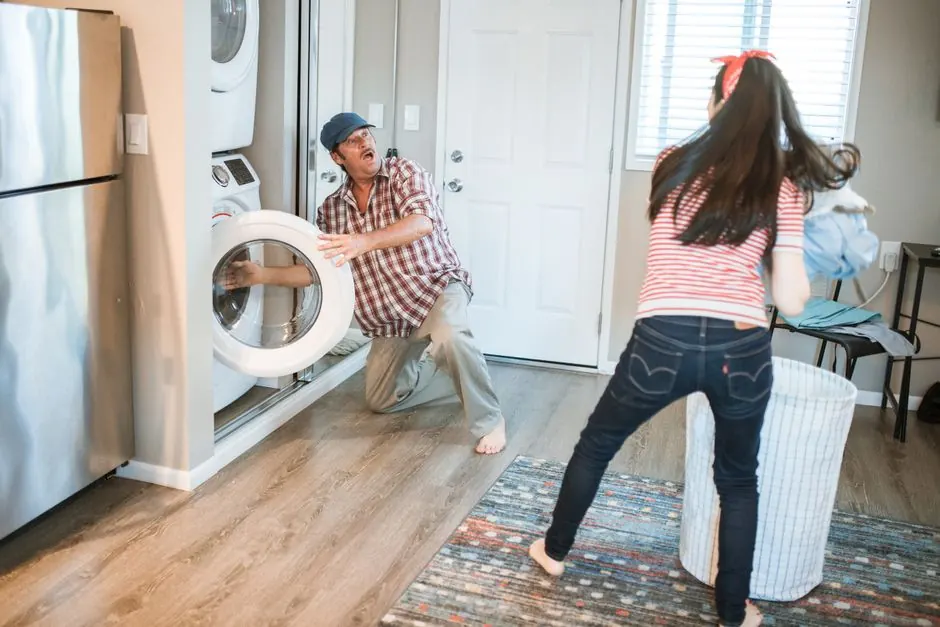
Your washing machine is leaking water in Beachwood because one of seven parts has failed: the fill hoses, the drain hose, the door boot seal, the drain pump, the water inlet valve, the tub seal or bearing, or a loose connection at the standpipe. Nine out of ten leaks we see in Beachwood homes trace back to the first four. The rest of this post walks you through how to pinpoint which one is yours, what it costs to fix in 2026, and when a leak stops being a Saturday project and becomes a call to a pro.
We run Washing Machine & Dryer Repair in Toms River, New Jersey, and Beachwood is one of our most common service areas. We have seen the same leaks in the same model years in the same blocks of bungalows and split-levels for years. Here is what we know.
The short answer: why your Beachwood washer is leaking
Washing machine leaking water in Beachwood is a plumbing-and-seal failure that shows up when a rubber part ages out, a hose works loose, or a drain line backs up under load. The leak location tells you almost everything. Water at the back of the machine points to the hoses or inlet valve. Water at the front points to the door boot on a front-loader or the tub seal on a top-loader. Water under the middle points to the pump or the drain.
Beachwood sits between Toms River and the barrier island, and the housing stock reflects that. A lot of the washers we service here are in homes built between 1955 and 1985, with laundry closets that were sized for a 27-inch top-loader and now hold a 29-inch front-loader with a plastic drain pan that has cracked. That mismatch is behind a surprising number of the leaks we get called for.
How to find the leak source in 10 minutes
Finding the leak source in a Beachwood home takes about 10 minutes with a flashlight and a dry paper towel. Do this before you call anyone - it saves you money on the diagnostic and it tells the technician what parts to bring.
- Dry everything. Wipe down the floor, the hoses, the underside of the cabinet, and the back panel. You cannot find a leak on a wet surface.
- Run a short fill cycle. Start a hot wash with no clothes. Watch the back of the machine where the hoses connect. If water beads up at a coupling within the first two minutes, you have a hose or inlet valve problem.
- Watch the drain. Let the machine advance to the drain-and-spin phase. Water pooling under the center of the machine during drain points to the pump or a loose drain hose at the standpipe.
- Check the front. On a front-loader, run your hand along the bottom of the door boot. A wet boot at the 6 o'clock position means the seal is torn or the door is not latching tight.
- Look under the tub. Tilt a top-loader back (unplug it first) and look for streaks running down the outer tub. That is a tub seal or bearing failure, and it is the one leak you should not try to fix yourself.
If you get through those five steps and still cannot find the source, the leak is likely intermittent - which usually means a hose that only leaks under full pressure or a pump that only leaks at the end of the drain cycle. That is the point where a proper Appliance Diagnostic Service in Toms River, New Jersey pays for itself.
The 7 most common causes of a washer leaking in Beachwood New Jersey
The seven causes below account for nearly every washer water leak Beachwood NJ homeowners call us about. They are listed roughly in order of how often we see them.
1. Fill hoses that have aged out
Standard rubber fill hoses have a service life of about five years. Braided stainless hoses last closer to ten. In a Beachwood laundry closet that runs hot water cycles several times a week, rubber hoses get brittle and the crimp at the coupling starts to weep. A pinhole in a fill hose can put two gallons on your floor in a single cycle.
2. A drain hose that has slipped out of the standpipe
This is the most common cause of a washer leaking near me Beachwood call that turns out to be nothing wrong with the machine. The drain hose sits in a standpipe behind the washer. If it is not secured with a zip tie or a hose clamp, the pressure of the drain cycle can push it out. Water shoots down the back wall and pools under the machine. Check this first - it is a two-dollar fix.
3. A clogged or failed drain pump
The drain pump pushes water out of the tub at the end of the wash cycle. When lint, sand, and Beachwood's fine barrier-island grit get past the filter, the impeller wears and the pump housing cracks. You will hear a grinding or humming sound during drain, and water will pool under the center of the machine. A Washer Drain Pump Repair in Toms River, New Jersey is usually a same-visit job.
4. A failing water inlet valve
The inlet valve opens and closes to let hot and cold water into the tub. When the solenoid fails, the valve can stick open and overflow the tub, or stick partially and drip continuously even when the machine is off. If you find water under the back of the washer on a day you did not run a load, the inlet valve is the prime suspect.
5. A torn door boot on a front-loader
Covered in detail below - it deserves its own section.
6. A worn tub seal or bearing
On a top-loader, the tub seal sits between the inner and outer tub. When it fails, water runs down the outside of the outer tub and pools under the machine. On a front-loader, the same failure shows up as a rumble during spin and a rust-colored streak on the floor. This is the most expensive leak to fix and the one most likely to total an older machine.
7. A loose or cross-threaded connection
If you recently moved the washer or replaced a hose, a cross-threaded coupling will leak under pressure. Hand-tighten plus a quarter turn with pliers is all a fill hose needs. Over-tightening cracks the plastic inlet on the back of the machine, and that is a much bigger repair.
Front-load washer leaking in Beachwood: the door boot problem
A front-load washer leaking in Beachwood is almost always the door boot - the rubber gasket that seals the door against the tub. It is the single most common front-loader leak we fix, and it is the one homeowners most often misdiagnose as a plumbing problem.
The boot has a fold in it that traps water, lint, and detergent residue. Over two to four years of regular use, that fold collects grit, the rubber stiffens, and a small tear opens at the bottom of the gasket. You will see water dripping from the bottom edge of the door during the wash cycle, not the spin.
Three things make a front-loader boot fail faster in Beachwood homes:
- Too much detergent. High-efficiency machines need two tablespoons, not a full cap. Excess suds push past the boot.
- Overloading. A packed drum flexes the door frame and stresses the gasket on every cycle.
- Leaving the door shut. A closed door traps moisture against the boot and grows mildew that eats the rubber.
If the boot is torn, it has to be replaced - there is no reliable patch. A Front-Load Washer Repair in Toms River, New Jersey for a boot replacement runs about 60 to 90 minutes on site, and we test a full cycle before we leave.
Why Beachwood homes see more washer leaks than inland towns
Beachwood homes see more washer leaks than inland towns because of three local factors: older laundry closets, humidity, and water pressure that spikes in summer.
First, the housing stock. A large share of Beachwood's single-family homes were built in the post-war decades, and many still have the original 24-inch laundry alcove. When a modern 27- or 29-inch front-loader gets squeezed into that space, the hoses get kinked against the wall and the drain hose sits at an angle that encourages it to pop out of the standpipe.
Second, humidity. Beachwood is a river-to-bay town, and the summer dew point here sits in the 65 to 72 degree range for weeks at a time. That humidity keeps rubber hoses and door boots soft and pliable - which sounds good until you realize it also accelerates mildew growth inside the boot fold.
Third, water pressure. Toms River Township water pressure runs higher in July and August when irrigation demand peaks. A fill hose that held fine at 55 PSI in April can weep at 80 PSI in July. If your washer only leaks in summer, this is usually why.
We see the same pattern in neighboring towns. Homeowners we work with on Top-Load Washer Repair in Toms River, New Jersey in the older sections near the river report the same summer-only leaks, and the fix is almost always the same: new braided hoses and a secured drain line.
What to watch out for: mistakes that make a washer leak worse
The biggest mistake we see is running the machine again after a leak to "see if it does it again." Every cycle you run on a leaking washer puts water under the floor, into the subfloor, and into the ceiling of whatever room is below the laundry. In a Beachwood split-level, that is usually a finished basement.
Other mistakes that turn a $200 repair into a $2,000 one:
- Ignoring a slow drip. A drip that puts a cup of water on the floor per cycle becomes a cup per minute once the seal fully fails.
- Using plumber's tape on a plastic inlet. Teflon tape on a plastic-threaded inlet valve cracks the housing. Those threads are meant to seal on the rubber washer, not on tape.
- Patching a door boot with silicone. It holds for a week. Then it peels, and you have silicone residue on the gasket surface that makes the new boot harder to seat.
- Running a top-loader with a known tub seal leak. Water in the bearing housing rusts the bearing, and a $180 seal job becomes a $500 bearing-and-seal job.
- Stacking a washer and dryer on a floor that is not level. An unlevel stack flexes the cabinet and stresses every hose connection on the machine.
One more: do not put a plastic drain pan under a leaking washer and call it solved. A pan catches about a gallon. A failed fill hose releases five to ten gallons in under a minute.
When to call a professional
Call a professional when the leak is at the tub seal, the bearing, the inlet valve, or the control board - those four repairs require pulling the machine apart, and two of them require specialty tools. Call us immediately if you see water running into a finished ceiling below the laundry, if the machine trips a GFCI outlet when it leaks, or if you cannot find the source after the 10-minute test above.
At Laundry Fix Solutions, we diagnose the leak on the first visit, quote the repair before we start, and carry the common parts - fill hoses, drain pumps, inlet valves, and door boots for the major brands - on the truck. If the machine is not worth fixing, we tell you that too, and we do not charge you for a repair we would not make on our own washer.
For leaks that happen on a weekend or after hours, we also run an Emergency Appliance Repair in Toms River, New Jersey line so you are not waiting until Monday with water on the floor.
What washer leak repair costs in Beachwood (2026 pricing)
Washer leak repair in Beachwood runs $150 to $650 in 2026, depending on which part failed and whether the machine is a top-loader or front-loader. The diagnostic visit is a flat fee, and we credit it toward the repair if you approve the work.
Typical 2026 pricing in this area:
- Fill hose replacement (pair): $150-$220, including parts and labor.
- Drain hose reseat or replacement: $120-$180.
- Drain pump replacement: $220-$340.
- Water inlet valve replacement: $200-$300.
- Front-load door boot replacement: $280-$420.
- Tub seal and bearing replacement: $450-$650 on a top-loader; often $600+ on a front-loader.
Two things push the number up. First, if the machine is stacked or in a tight closet, we may need a second technician to pull it out safely - that adds about $60. Second, if water has reached the control board, the board itself is $180 to $350 on top of the labor.
Two things push it down. If the leak is a hose that slipped out of the standpipe, the fix is a $3 clamp and 10 minutes. If you catch a slow drip before the seal fully fails, you often avoid the bearing replacement entirely.
Frequently Asked Questions
Why is my washing machine leaking water in Beachwood?
Nine out of ten Beachwood washer leaks come from a fill hose, a drain hose that slipped out of the standpipe, a failed drain pump, or a torn door boot. Older laundry closets in Beachwood homes squeeze modern washers, which stresses the hoses and makes these failures more common here than inland.
How do I stop my washer from leaking in Beachwood New Jersey?
Stop the leak by finding the source first: dry the machine, run a short fill cycle, and watch the back, the front, and the underside. If the drain hose slipped out, secure it with a zip tie. If a hose is weeping, replace both fill hoses with braided stainless. For a door boot or tub seal, call a technician.
Who repairs washing machine leaks near me in Beachwood?
Laundry Fix Solutions repairs washing machine leaks across Beachwood and the surrounding Toms River area, usually same-day. We carry common parts on the truck and quote the repair before we start. Call +18482758011 to schedule.
What causes a washing machine to leak in Beachwood homes?
The top causes are aged rubber fill hoses, a drain hose that pops out of the standpipe under pressure, a worn drain pump, a failing water inlet valve, a torn front-load door boot, and a tub seal or bearing failure. Summer water pressure spikes in Toms River Township make hose leaks more common from June through September.
How much does washer leak repair cost in Beachwood?
Most washer leak repairs in Beachwood cost $150 to $650 in 2026. A hose fix is at the low end; a tub seal and bearing replacement is at the high end. The diagnostic fee is credited toward the repair if you approve the work.
Get help with Washing Machine & Dryer Repair in Toms River
If your washer is leaking and you have ruled out the easy fixes, we can be at your door in Beachwood or anywhere in the Toms River area, usually the same day. We find the leak, fix it, and run a full test cycle before we leave - no water on your floor when we walk out.
Call Laundry Fix Solutions at +18482758011 to schedule a washer leak repair in Beachwood.